

●Insights
The Last Campfire: Why Fandom Is the Only Strategy That Still Matters
In a world of digital noise, sports and entertainment have become our final public utilities for connection.
In 2026 we are more connected than ever, and more starved for connection than anyone wants to admit.
Sixty-two percent of people say the best thing that happened to them this week was an offline moment. Not a scroll. Not a streak. A room, a match, a song, a face across a table. We live inside machines that promise community and deliver captivity. The rebellion is quiet, and it is already here: people are hunting for Offline Joy.
Whether it is a sold-out stadium in Madrid, a packed arena in Abu Dhabi, or a local community center on a Tuesday night, sports and entertainment have become the Last Campfire. They are the final places where strangers still look at the same thing, at the same time, and feel the same emotion. Everything else has fragmented into private feeds. These moments have not.
Fandom is a public utility for belonging
Fandom is not a hobby bolted onto leisure. It is infrastructure for identity.
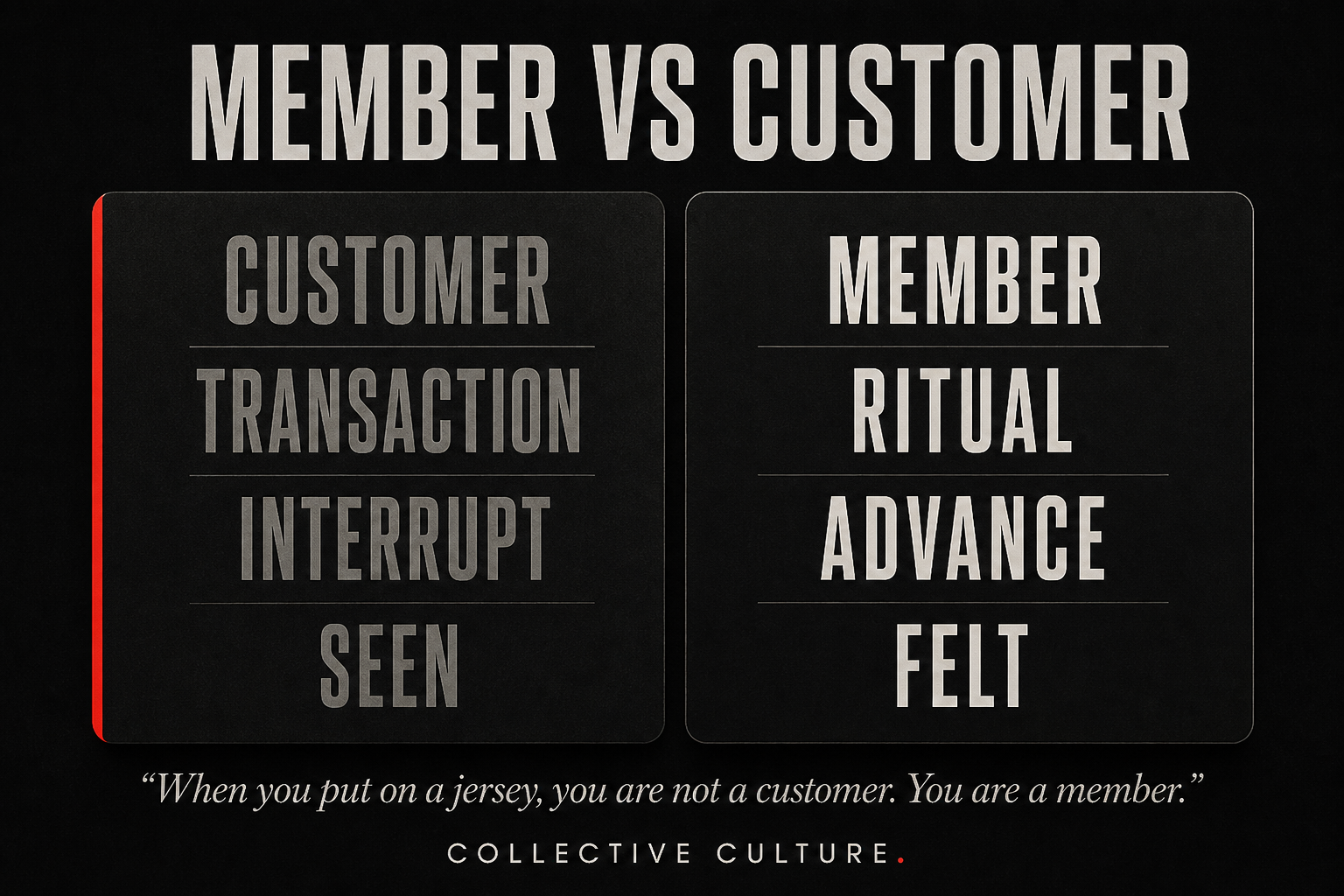
People do not follow a team or an artist only because they like the product on the pitch or the stage. They follow because the ritual gives them a calendar, a heritage, a language, and a community that does not dissolve when the app updates. When you put on a jersey or walk into a show, you are not a customer completing a transaction. You are a member renewing a vow.
That distinction is the entire strategic map. Customers can be interrupted. Members will not forgive interruption of the thing that makes them feel human.
The gentle problem
Most brands still treat these sacred spaces like billboards.
They buy adjacency. They measure presence. They congratulate themselves on being seen next to something people love. Then they wonder why the association evaporates by Monday. The campfire was never asking for another logo. It was asking for someone to keep the fire alive.
When a brand enters the campfire, it faces a binary:
- Interrupt the story to sell a product.
- Bring more wood to the fire.
There is no clever third option. Soft interruption is still interruption. Clever badging is still badging. Fans know the difference in their bodies long before research reports catch up.
From awareness to utility
The Cultural Economy is no longer an awareness contest. Awareness is cheap. Belonging is expensive. The brands that win are the ones that behave like utilities for fandom: they make game day faster, the connection deeper, or the memory longer. They solve Fan Problems.
A Fan Problem is friction that sits between a person and the ritual they came for. Queues that kill the first half. Apps that hide the moment. Merch that feels like a tax. Content that explains nothing and sells everything. Fix those, and you move from being seen to being felt.
Illustrative Thinking: a venue partner that collapses entry time, a data brand that turns live stats into shared prediction, a music partner that extends the afterglow beyond the encore. These are category patterns, not CCA client results. The point is the posture: service first, logo second.
The only question left
As the next decade of global growth in sports and music accelerates, the question for every leader should not be how to get the logo on the screen. It should be how to become a cultural anchor.
A cultural anchor is remembered when the lights come up. It is named when fans tell the story of the night. It shows up in the rituals people keep without being paid to keep them.
In a world that is increasingly intentionless and frictionless, the things we remember are the things that made us feel like we belonged. The Last Campfire is still burning. Bring wood, or stay outside the circle.