

●Insights
Beyond the Stadium: Solving the Activation Gap
Why brands must move from buying rights to building systems.
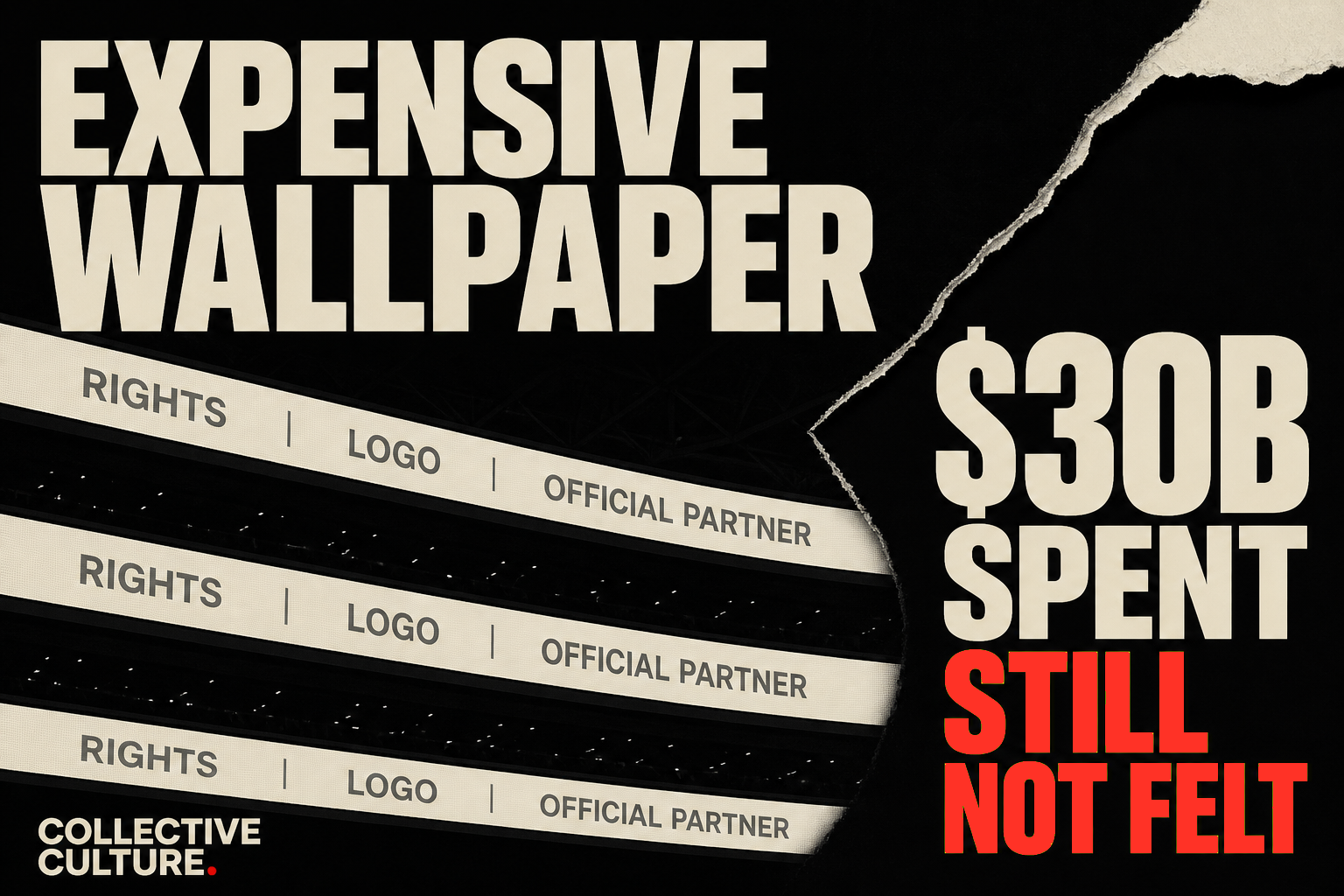
Industry trackers place the global sports sponsorship market well above $50 billion a year. Brands secure the IP, the Official Partner titles, and the primary logo placements. Then, as soon as the deal is signed, a recurring industry failure appears: the Activation Gap.
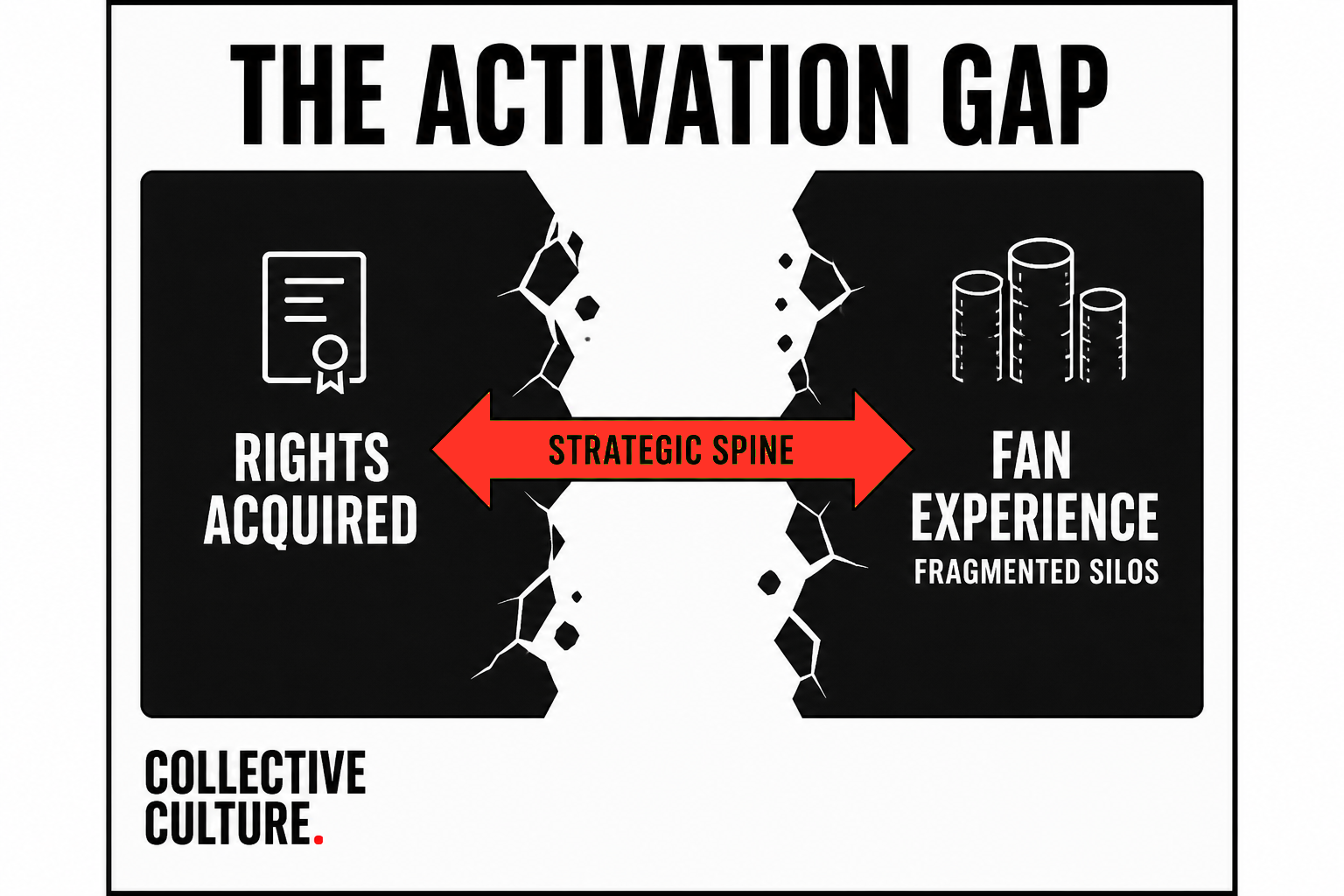
The Activation Gap is what happens when the high-level work of buying rights fails to translate into a unified fan experience. The contract is inked. The press release ships. Execution fragments into silos.
The Paid Media team chases impressions.
The Social team chases engagement.
The Experiential team builds a physical activation in a vacuum.
The result is a brand that is seen, but never felt. In an era hungry for Offline Joy, presence alone is not a strategy. To survive the modern Survival Economy, brands must move from spectators at the campfire to cultural anchors inside it.
Why rights without systems become wallpaper
Rights are permission. They are not a plan.
Buying the right to stand next to a team, a tour, or a league is an expensive ticket to the room. It does not tell Paid what story to tell. It does not tell Social how to serve members rather than harvest clicks. It does not tell Experiential how to reduce friction for the person who already paid to be there. Without a spine, each unit improvises toward its own KPI, and the fan experiences three brands wearing one logo.
That is how a $30 million sponsorship becomes expensive wallpaper: visible, costly, and emotionally inert.
The solution: a Unified Strategic Spine
To close the gap, implement a Unified Strategic Spine. This is not a static PDF. It is a living system that gives creative freedom a set of guardrails strong enough to scale.
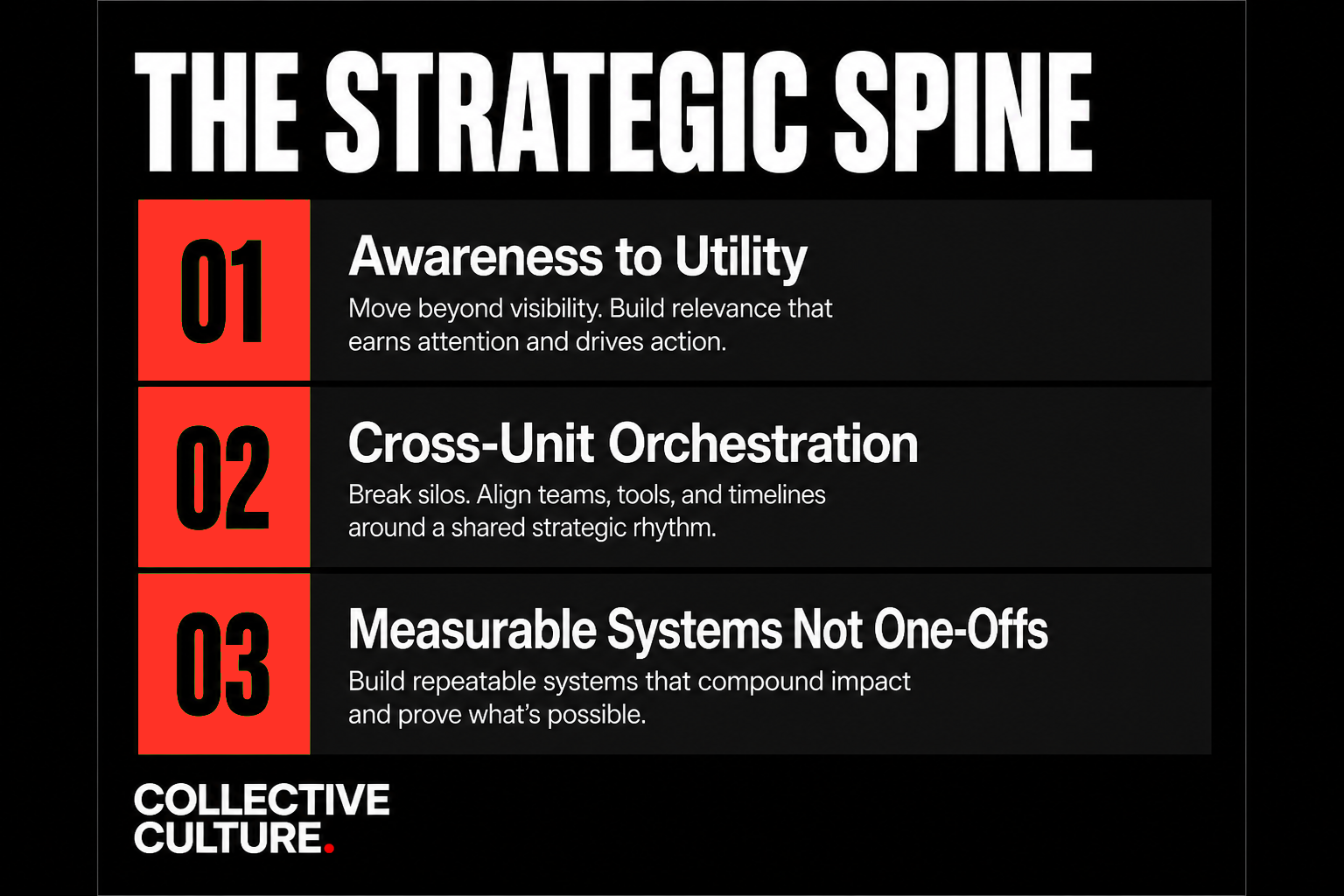
1. From Awareness to Utility
Ask one question of every activation: does this solve a Fan Problem? Reducing venue friction, clarifying the game through data, extending the memory after the final whistle: these are utilities. Logo adjacency is not. When sponsorship behaves like a public utility for fandom, impressions become a byproduct of usefulness.
2. Cross-Unit Orchestration
Strategy must act as connective tissue. When the spine is clear, Paid, Social, and Experiential stop operating as separate departments and start behaving as one scalable ecosystem. The same promise shows up in the feed, on the concourse, and in the hospitality suite, because it was designed once and executed many ways.
3. Measurable Systems, Not One-Offs
Shift ROI from a badging exercise to an investment in infrastructure. Build systems that are repeatable across venues and seasons. Every dollar should compound into a platform, not evaporate into a fleeting moment that cannot be rebuilt next year.
Illustrative Thinking: a rights package rebuilt as a season-long fan utility layer (entry, prediction, memory capture) rather than a one-weekend booth. Category pattern only. Not a CCA client case study.
Seen versus felt
Being seen is a media outcome. Being felt is a membership outcome.
Fans feel a brand when it removes a pain they already had, deepens a ritual they already love, or helps them belong more fully to the community they showed up for. That is behavior change, not awareness theater. Sponsorship Systems that operate this way do not merely drive impressions. They change what people do on game day and what they remember afterward.
The next era
The next era of sports marketing belongs to those who can bridge high-level consulting and creative execution. Rights without activation are a purchase. Rights with a Strategic Spine are a platform.
Stop buying rights. Start building the systems that make them matter. Beyond the stadium, that is the only gap that still decides who owns the relationship with the fan.